
Human experiences are depicted in ways that assist viewers to empathise with societal challenges and allow them to perceive the world in new ways. Individuals tend to overlook the vulnerability of things society has demonised or overlooked. Winton and Steve Cutts’ texts, bring these factors into light and challenge these preconceptions.
In Havoc: A Life in Accidents Winton discusses his individual struggle to accept his father’s weakness after his injury. “It was appalling to think of that guy kneeling at the bath and washing my father as If he were an infant”. In this simile comparing his father to an “infant”, Infant has negative connotations of vulnerability which challenged young Winton’s immortalised perception of his father. Confronting his father’s mortality was rewarded with a better understanding of the flaws in humanity, thus overcoming the social assumption that fear and vulnerability is solely detrimental. This realisation invites a change in perspective from the reader’s past experiences with vulnerability.
“It was appalling to think of that guy kneeling at the bath and washing my father as If he were an infant”
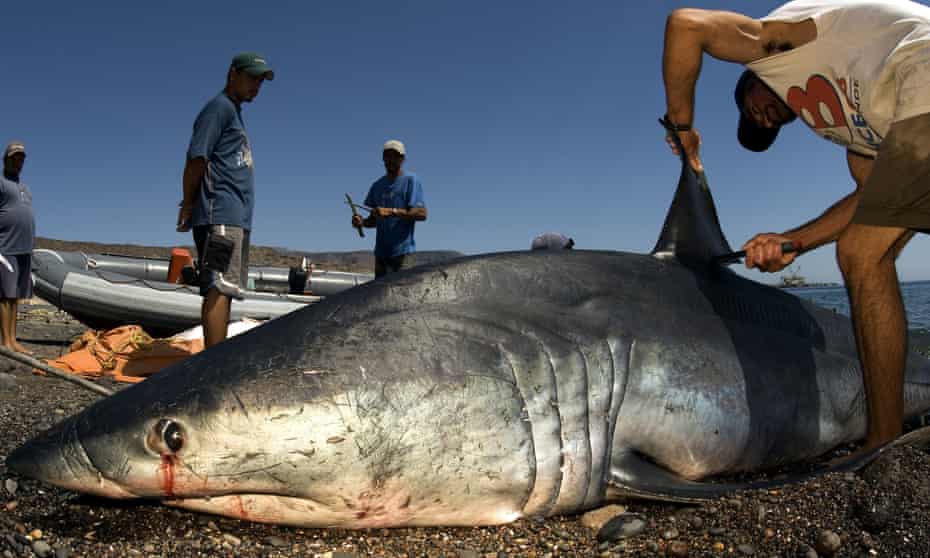
Winton tries to change the negative connotations surrounding sharks in the chapter The Demon Shark by splitting the chapter up into three sections. The first explains his prior knowledge of sharks, the second states the statistics surrounding them, and finally his personal experience with a shark. In the second section, Winton declares the flaws in the societal beliefs around the savagery of sharks. “the demonisation of sharks has blinded us, not just to our own savagery but also our casual hypocrisy.” He uses irony to reveal and challenge the paradox and casual hypocrisy in perceiving sharks as savages while humans slaughter them. The vulnerability of the sharks is overlooked and efforts to change society’s perception and treatment of sharks is met with resistance due to the large global population and their diverse knowledge and beliefs.
Shark Culling
Shark culling is the savage and deliberate killing of sharks by government authorities, usually in response to one or more shark attacks. The term “shark control” is often used by governments when referring to culls.
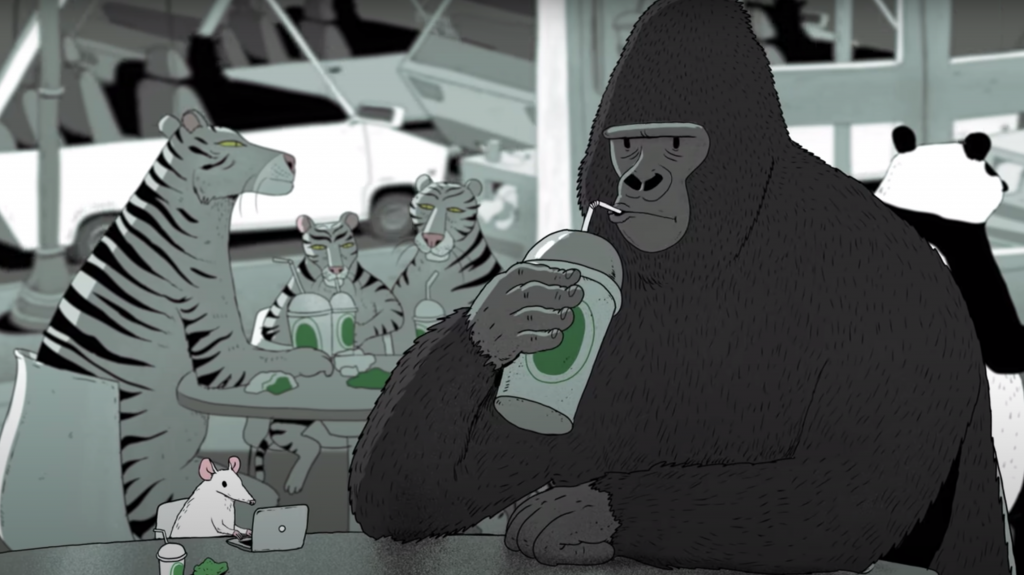
While Winton challenges assumptions about sharks. Steve Cutts confronts the ignorance surrounding climate change and pollution in the short film The Turning Point. This is achieved by reversing the roles of humans and animals to present how vulnerable animals are to the mistreatment of our planet through a powerful animation. In the scene shown below it depicts a polar bear with a tie signing a contract, the pen is dragged across the scene to a family of three sitting on an iceberg who are extremely malnourished and on the verge of death. The reversal of roles between humans and polar bears paired with the transitioning shot with a line displays how powerful humans have a direct linear impact on animals and are literally signing their death through contracts. The powerful images displayed in this scene show the vulnerability of the polar bears and their helplessness. By switching the roles Steve presents a shock factor that makes a statement of how if it were just polar bears sitting on the iceberg society will continue to live in ignorant bliss. This scene makes the viewer reflect on the decisions they make in day-to-day life as well as the powerlessness of animals which invites a change in perspective.