The representation of human experiences portray social issues that audiences can empathise with and allows them to see the world differently. Individuals adopt the societal assumptions that fear and vulnerability are solely detrimental to their identity. However, Winton and Steve Cutts’s texts challenge these assumptions by recognising growth and improvement as rewards of refining our identity and therefore inviting the responder to see the world differently.
Retrospective Authorial Intrusions exhibit Winton’s individual struggle in Havoc: A Life in Accidents to realise that fears are rewarding as well as detrimental by comparing his mindscape to a typography of accidents “My life feels like a topography of accidents. Sometimes or better or for worse, they are landmarks by which I take my bearings.” In this simile, the complexities of navigating fear and its influences on identity are illustrated. The topographical metaphor (Typography, Landmarks, Bearings) demonstrates that overcoming these obstacles results in a better understanding of one’s mental landscape and the ways we are influenced by our environment and past experiences. The marital imagery of the idiom “for better or for worse” compares the consequences of fears to marriage revealing their paradoxical nature to be both rewarding and challenging.

Through figurative language, these texts challenge flawed societal assumptions that denigrate and marginalise objects of fear. The collective struggle to provoke change is met with much resistance but once it gains momentum society’s perspective can grow and improve. In the chapter The Demon Shark, the motif of the shark is a symbol of fear and the unknown for Australians which Winton challenges to reveal the flaws in society’s irrational fear of sharks. Winton describes how the representation of sharks as dangerous was amplified by films “Spielberg’s Jaws sent folks lurching from the cinema and the water in horror”. Winton illuminates how the safety of oceans was challenged and the drastic fear of sharks consumed society. The use of hyperbole inspires the reader to think more deeply about this reaction and why sharks are a symbol of fear.
Quote
“Spielberg’s Jaws sent folks lurching from the cinema and the water in horror”
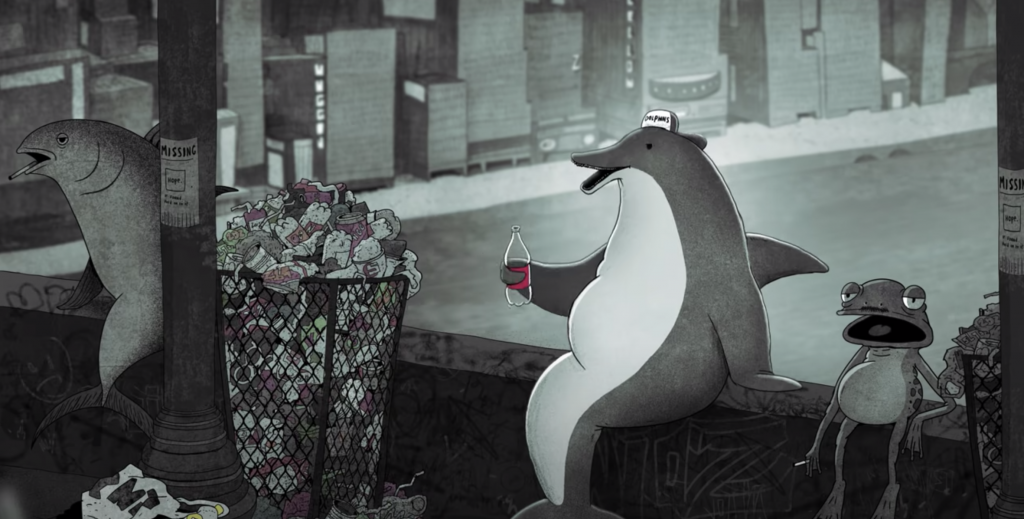
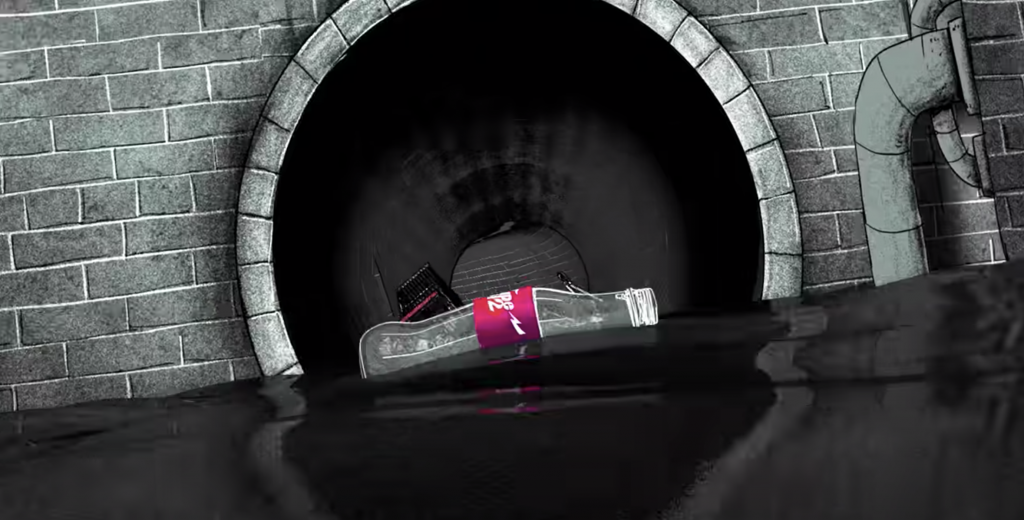
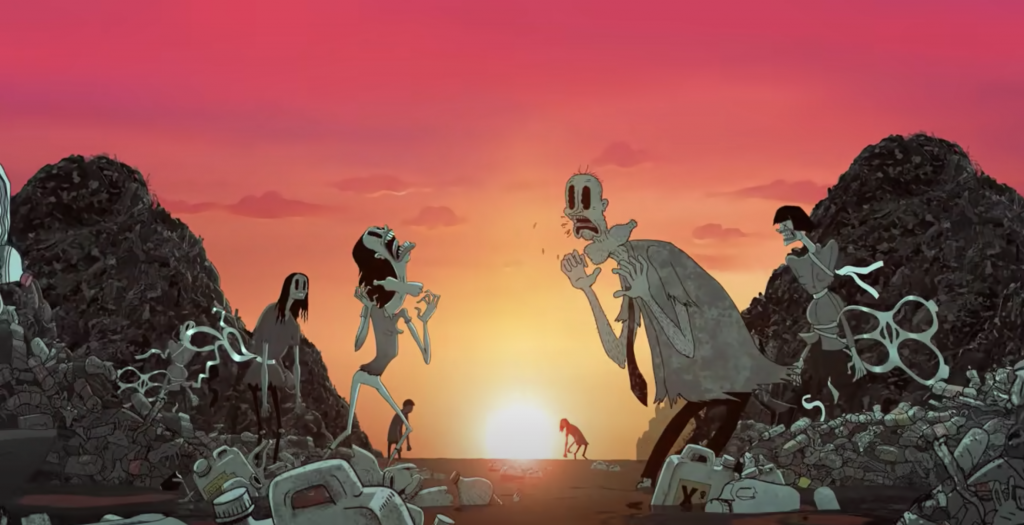
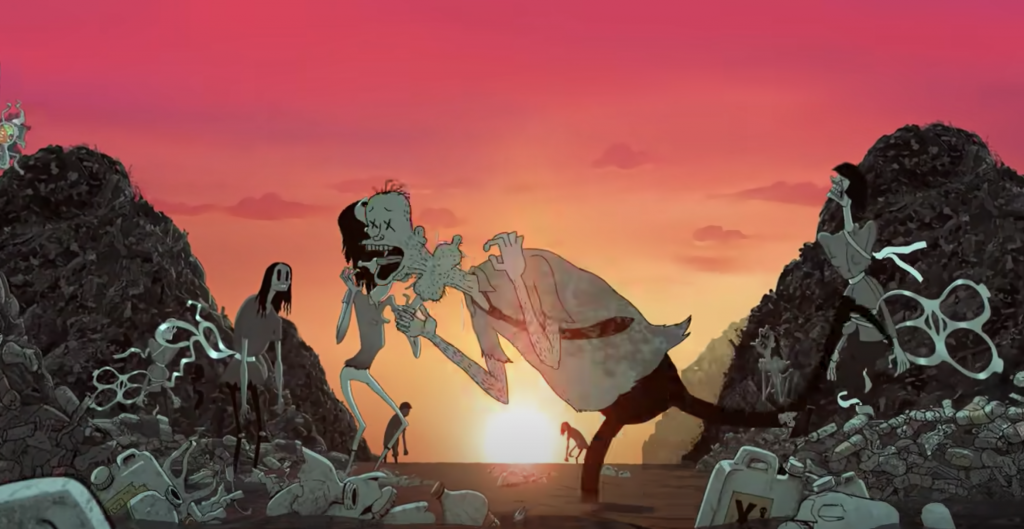
In The turning point, a society where the roles of humans and animals are switched to evoke fear as we see the impact humans have on the environment. A dolphin is shown drinking a coke bottle and chucking it into the water behind him. Throughout the scene, the bottle can be seen floating down the sewer where it ends up in a dump and is eaten by a human who proceeds to choke and die. A tracking shot is used to follow the bottle on its journey to the human’s mouth, this signifies the direct relationship between pollution and the death of animals. The impact of roles being reversed between humans and animals is that humans have a habit of taking their habits for granted. Until the perspective changes, everything appears self-evident. This short film and Winton’s chapters make us think about how we behave with other animals, which is savage and unethical provoking fear from the audience and the need for a change in perspective.